
You Are Getting Leads but Not Sales. The Problem Is Usually in One of Five Places
When leads arrive and revenue does not follow, owners usually blame the ads or the sales team. The cause is often in between, and it is usually measurable.
By Ads Ninza · Published 9 September 2026 · 6 min read
First, find where the leads are dropping
"Leads are not converting" is a symptom. The cause sits at a specific step between the enquiry and the sale, and you can find it with a simple count.
Take the last month of leads and record, for each one: was it contacted, did the person respond, were they qualified, did they get a meeting or visit, did they get a proposal or quote, did they buy. A spreadsheet is enough.
Now look at the percentages between each step. Most businesses find one step where the numbers fall much harder than the others. That step is where the effort belongs. Without this count, owners tend to change the ads when the problem is follow-up, or push the sales team when the problem is the ads.
The five usual causes
1. Slow or inconsistent first contact. If many leads are not contacted within the first hour, or some are never contacted, conversion will be poor regardless of lead quality. This is the most common cause we find and the cheapest to fix.
2. The ad attracts the wrong people. Ads that lead with "free", a big discount or a vague promise attract people who want free or cheap things. If most leads are unqualified on budget, this is likely.
3. The form is too easy. One-tap lead forms with no questions produce volume and accidental submissions. If many leads say they never enquired, this is it.
4. No follow-up after the first attempt. Many buyers are not ready on day one. Businesses that stop after one call lose everyone who needed a week or a month. A structured follow-up over several weeks recovers a real share of these.
5. The offer or price does not match the market. If leads are qualified, contacted quickly and reach proposal stage, but still do not buy, the issue is often the offer, price or proof. No marketing change fixes that. We wrote about this in our article on being argued down on price.
Fixes that work, by cause
Speed. An automated reply within a minute, on WhatsApp in India and the UAE or SMS and email elsewhere, then a call within the hour during working hours. Assign every lead to a named person. Our WhatsApp follow-up guide covers the setup.
Wrong people. State who the offer is for and the price range in the ad. Remove "free" unless the free thing leads directly to a sale. Fewer leads, more customers.
Easy forms. Add one or two qualifying questions: budget range, timeline, location. Use higher-intent form types on Meta. Send search traffic to a focused landing page, not a home page.
No follow-up. A simple sequence: call, WhatsApp or email, call again two days later, a useful message at one week, a check-in at three weeks. Record the outcome of each step.
Offer or price. Look at what lost deals said. Test a clearer offer, stronger proof, a smaller first step or a different price structure.
Close the loop with the ad platforms
Google and Meta optimise toward whatever you tell them is a conversion. If they only see "lead submitted", they will find more people who submit leads, including the ones who never buy.
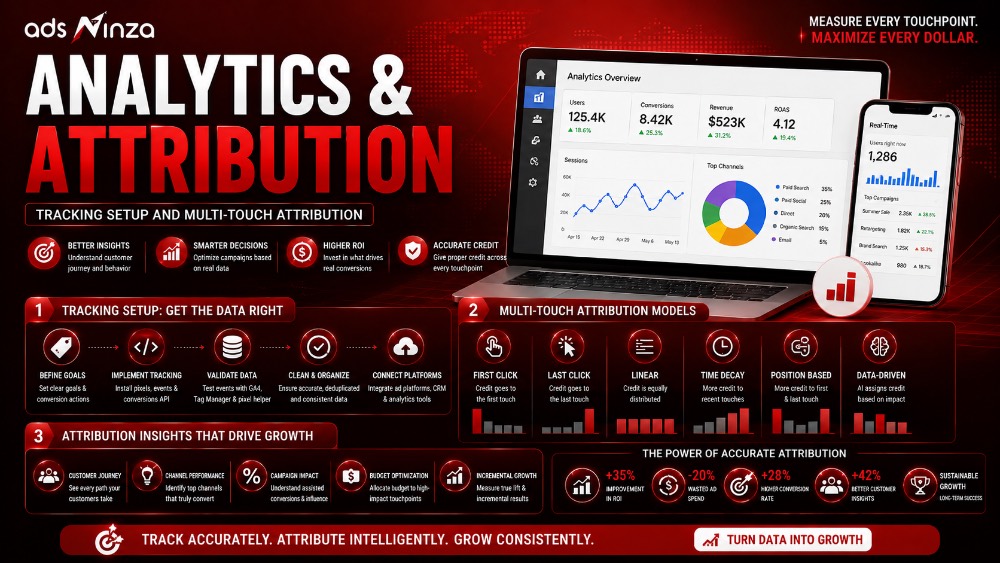
When your CRM sends back which leads were qualified and which bought, with values, the platforms start finding more people like your customers. This is called offline conversion import on Google and the Conversions API on Meta. In our experience it is the single biggest change to lead quality in accounts that already have the basics right.
We described how we set this up on the Conversion API and signal infrastructure page.
How this looks in different markets and industries
In education, where we have run admissions campaigns for clients such as RAP Education, the drop usually happens between enquiry and counselling session, and a structured webinar or seminar step between the two changed results sharply. In property, the drop is between enquiry and site visit, and speed of first call matters most.
In competitive Indian markets such as Mumbai, Delhi, Gurugram, Noida, Bengaluru and Hyderabad, the same buyer often enquires with three or four businesses at once, and the first to reply properly has a clear advantage.
In the USA, UK and Canada, B2B buyers expect a scheduled call and a clear next step rather than immediate phone contact. A booking link after the form often works better than a callback. In the UAE, WhatsApp as the first contact usually beats a phone call.
Frequently asked questions
Why am I getting leads but no sales?
Usually because of one of five causes: slow first contact, ads that attract the wrong people, forms that are too easy, no follow-up after the first attempt, or an offer or price that does not match the market. Count leads through each stage of your sales process to find which one applies.
What is a good lead to sale conversion rate?
It varies widely by industry, price and lead source. A high-value B2B service might close a small percentage of all leads and a much higher share of qualified ones. Compare your own rates by source and month rather than chasing an industry average.
How quickly should I contact a new lead?
As fast as possible, ideally within minutes. An automated first reply followed by a call within the hour during working hours is a realistic target for most businesses, and it often improves contact rates noticeably.
Are Facebook leads low quality?
They can be, mostly because of easy instant forms and ads that promise free things. With qualifying questions, higher-intent forms, clear pricing in the ad and lead outcomes sent back to Meta, Facebook and Instagram leads can be as good as search leads for many businesses.
How many times should I follow up with a lead?
More than once. Several attempts across two to three weeks, mixing calls, WhatsApp or SMS and email, recovers many buyers who were not ready on the first day. Stop when the person says no or asks you to.
Should marketing or sales own lead conversion?
Both, with clear handover. Marketing owns lead quality and the information passed to sales. Sales owns contact speed and follow-up. A shared weekly look at the lead-to-sale funnel stops each side blaming the other.
What is lead qualification?
Deciding whether a lead is likely to buy, usually by checking budget, need, timeline and authority. Some qualification can happen on the form with one or two questions. The rest happens in the first conversation.
What is offline conversion import?
Sending lead outcomes from your CRM back to Google Ads, and to Meta through the Conversions API, so the platforms learn which clicks produced qualified leads and sales. It is the most effective way to improve lead quality from paid campaigns.
Do I need a CRM to fix this?
For a small number of leads, a well-kept spreadsheet works. Once you have several people handling leads or more than a few dozen a month, a CRM makes tracking, follow-up and offline conversion import much easier.
How do we start with Ads Ninza?
Apply through the form on this page. On a paid discovery call, INR 499 in India and $9 elsewhere, we go through your lead-to-sale numbers with you and identify the step losing the most revenue. Services start at INR 35,000 per month in India and $500 per month outside India.